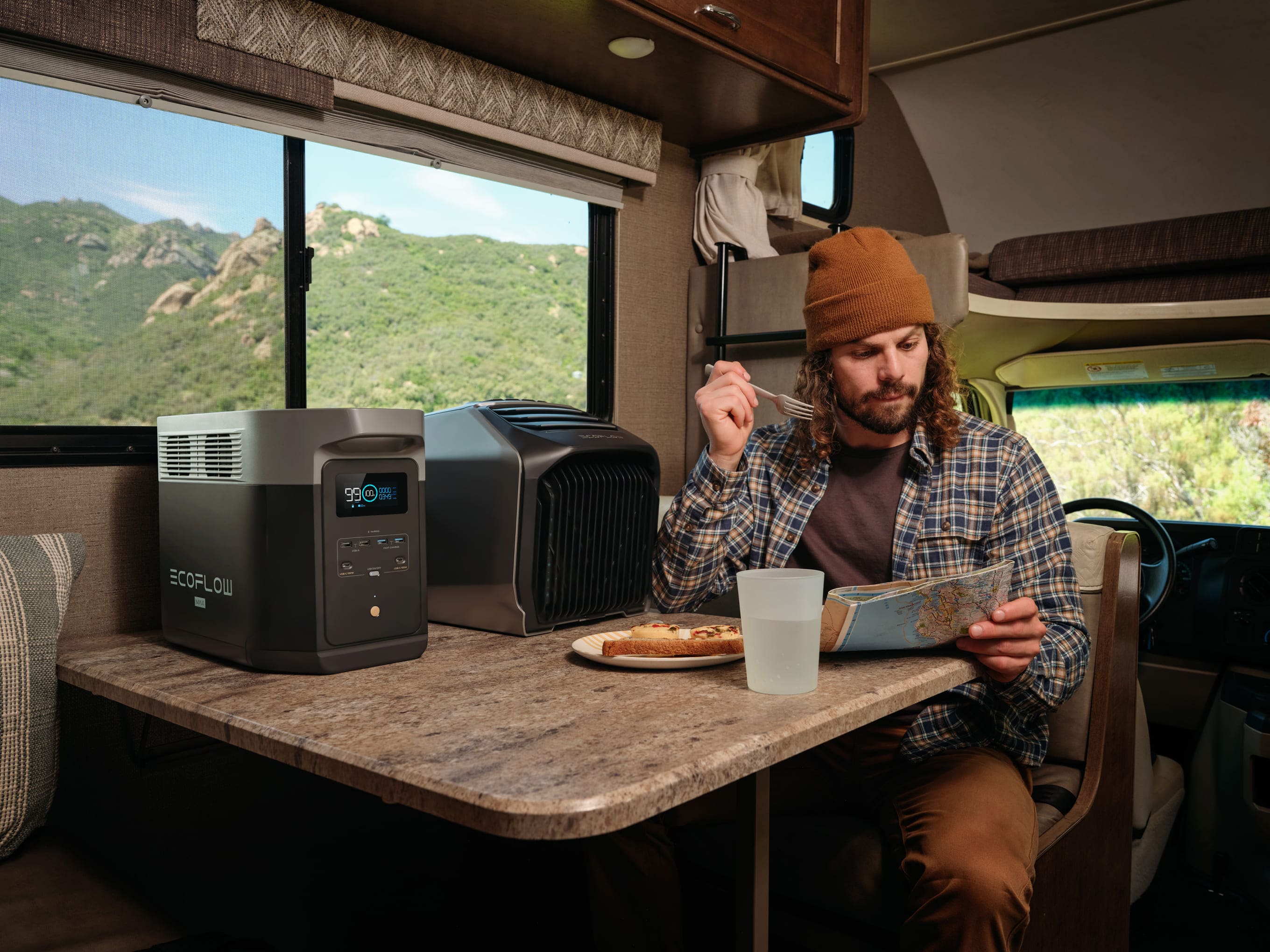
Cooling a sealed small space without access to a wall outlet is an engineering problem that the market has been solving badly for a long time.
Single-hose portable air conditioners create negative pressure in the space they are trying to cool. The physics are straightforward: one hose exhausts hot air outside, but the unit pulls its intake air from inside the space rather than from outside, which creates a pressure deficit. That deficit pulls warm air in through every gap, crack, and imperfection in the space's envelope, simultaneously with the unit working to cool the air inside. You are racing against yourself. The single-hose design is common because it is cheap to manufacture, not because it is effective.
Dual-hose designs break this dynamic. One hose pulls ambient air from outside for the condenser; the other exhausts the hot refrigerant air back outside. The interior of the space is sealed from both exchanges. Neutral pressure is maintained. The unit cools the interior without simultaneously importing warm air to replace what it is removing.
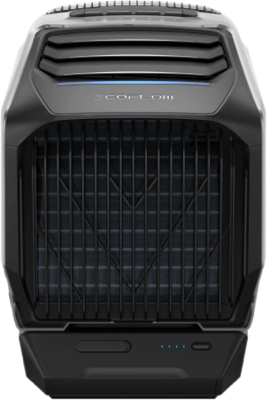
The EcoFlow Wave 2 is a dual-hose portable air conditioner with a dedicated battery pack designed specifically for off-grid use. After extended time with it in a van context, the complete picture is more nuanced than most reviews suggest, and the nuance is worth understanding before buying.
Technical Specifications and Capacity
The Wave 2 uses a conventional vapor-compression refrigeration cycle, identical in principle to any residential split system, with the dual-hose ducting described above. Cooling capacity is rated at 8,000 BTU in standard mode with shore power and 5,100 BTU in battery-only mode, a reduction that reflects the power constraints of battery operation.
EcoFlow rates battery-only runtime at three to six hours depending on ambient temperature and fan speed. In practice, at high ambient temperatures and mid-range fan speed, which is the scenario most relevant to anyone using this in summer heat, three to three and a half hours is the realistic expectation before the battery requires charging. The optimistic end of the published range is achievable at mild temperatures on low fan speed, conditions that most people using a portable AC in hot weather are not experiencing.
Heating mode operates via heat pump rather than resistance heating, giving it an efficiency ratio above 1:1 in mild cold: more heating output per watt than an equivalent resistance heater produces. Below approximately 41 degrees Fahrenheit, heat pump efficiency decreases and the unit transitions automatically to resistance heating. For shoulder-season use in a van or for winter heating in mild climates, the heat pump mode is meaningfully more efficient than any resistance alternative.

The Battery Pack
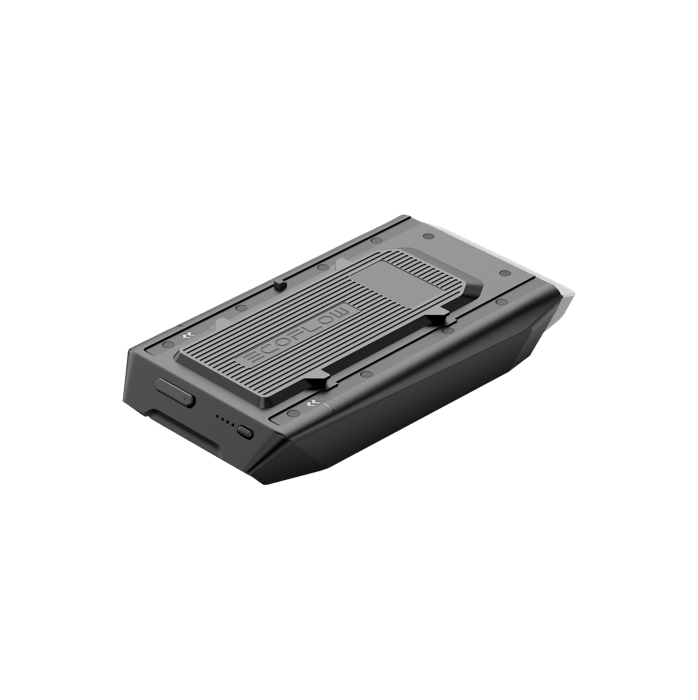
The dedicated Wave 2 battery pack, purchased separately from the base unit, clips to the underside of the unit through a connection that is clean and secure. The battery capacity is approximately 1,159Wh in the standard pack. It charges from wall power, from a solar input of up to 400 watts, or from the AC unit itself when the unit is connected to shore power, allowing simultaneous cooling and battery charging.
The EcoFlow app manages the full system: battery state of charge, current draw, mode selection, scheduling, and remote control via Bluetooth or Wi-Fi. The app is one of the consistently well-executed elements of EcoFlow's product ecosystem. It is genuinely useful rather than a checkbox feature, reliable across updates, and functions locally without requiring cloud connectivity for basic operation. Scheduling the unit to pre-cool a space before you enter it is a feature that sounds minor and turns out to matter more than expected in regular use.
Noise, Which Deserves Specific Attention
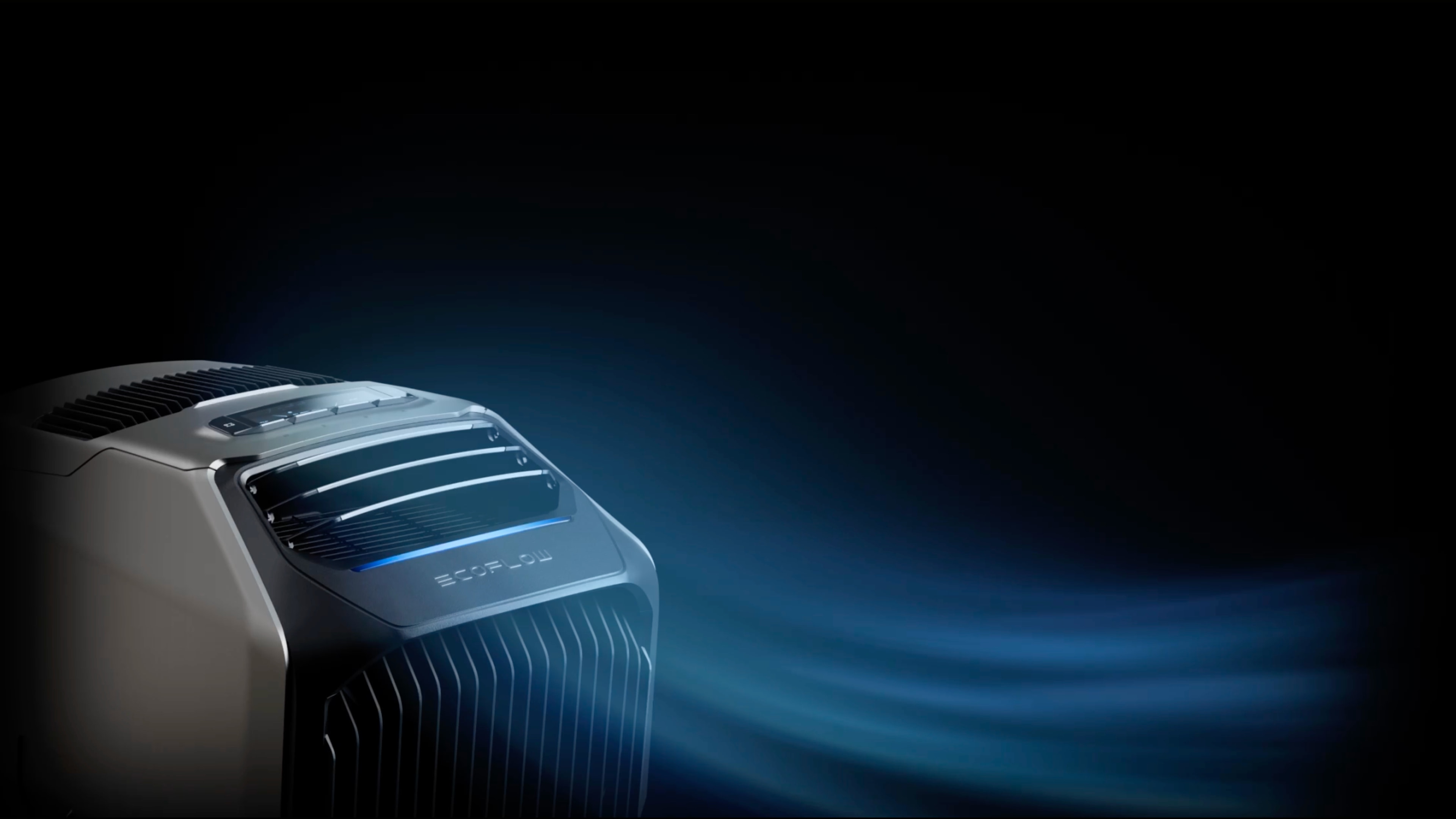
At maximum fan speed, the Wave 2 produces approximately 52 to 54 dB measured at one meter. This is roughly equivalent to a normal conversational voice. In the interior of a van, which is a reflective, low-volume acoustic environment, 54 dB at the source produces a listening experience louder than that measurement suggests to anyone accustomed to evaluating speaker systems in open rooms.
At the lowest fan speed, noise drops to approximately 44 dB. This is manageable for sleep with moderate white noise tolerance. The tradeoff is meaningfully reduced cooling capacity at low speed, which extends the time required to bring the space to target temperature and may be insufficient to hold it there at high ambient temperatures.
The practical workflow I settled on: run the unit at full speed to pre-cool before sleeping, which takes 20 to 40 minutes depending on starting temperature and ambient conditions outside, then switch to low when ready to sleep. The thermal mass of a pre-cooled van holds temperature long enough to make this pattern functional. It is not as seamless as a residential mini-split running quietly in the background, but it works.
Installation in a Van
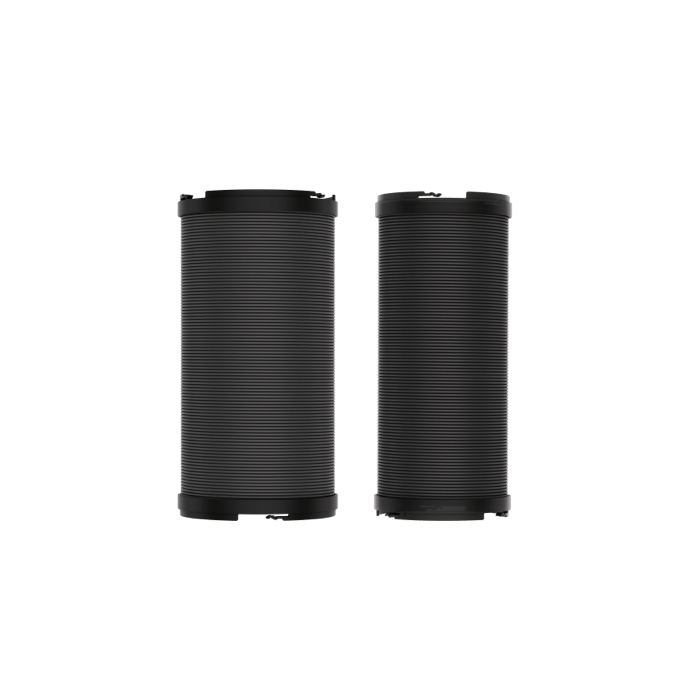
The Wave 2 requires two four-inch-diameter openings to the exterior of the space for the dual hoses. In a van context, this means either installing permanent vent fittings in the floor, sidewall, or rear door, or routing the hoses through a custom window panel fabricated for this purpose, which is the same approach used with any portable AC.
The custom window panel approach is the most common solution and the most reversible: a piece of aluminum or polycarbonate cut to the window opening with two grommeted holes for the hose outlets. This requires no permanent modification to the van and can be removed when the unit is not in use. The tradeoff is that the window is blocked for the duration of use, which matters more in some parking situations than others.
The unit with battery pack attached weighs approximately 31 kilograms. It stays where you place it. It has wheels and a handle for moving across flat surfaces. In a van it typically mounts to the floor with straps or brackets to prevent movement while driving.
The Honest Context for the Price
The Wave 2 is expensive. The base unit alone is a significant purchase; the battery pack adds substantially to the total system cost. The relevant comparison is not other portable AC units, most of which are single-hose designs that work less well. The relevant comparison is a roof-mounted air conditioner, which costs similarly or more, requires permanent installation, and is incompatible with some van configurations and many parking situations with height restrictions.
Against that comparison, the Wave 2 is a premium product solving a specific problem with genuine technical care. The dual-hose design is correct. The battery integration is well-executed. The app is the best in the portable power category. The noise is real and not adequately communicated in most promotional material.
Buy it if you need off-grid cooling in a sealed small space and the alternatives either require permanent installation or use a design you now understand to be thermodynamically compromised. Avoid it if a window unit or mini-split will serve your actual use context. The Wave 2 earns its price in exactly the situations it was designed for, which are specific enough that you should be certain you are in one of them before buying.