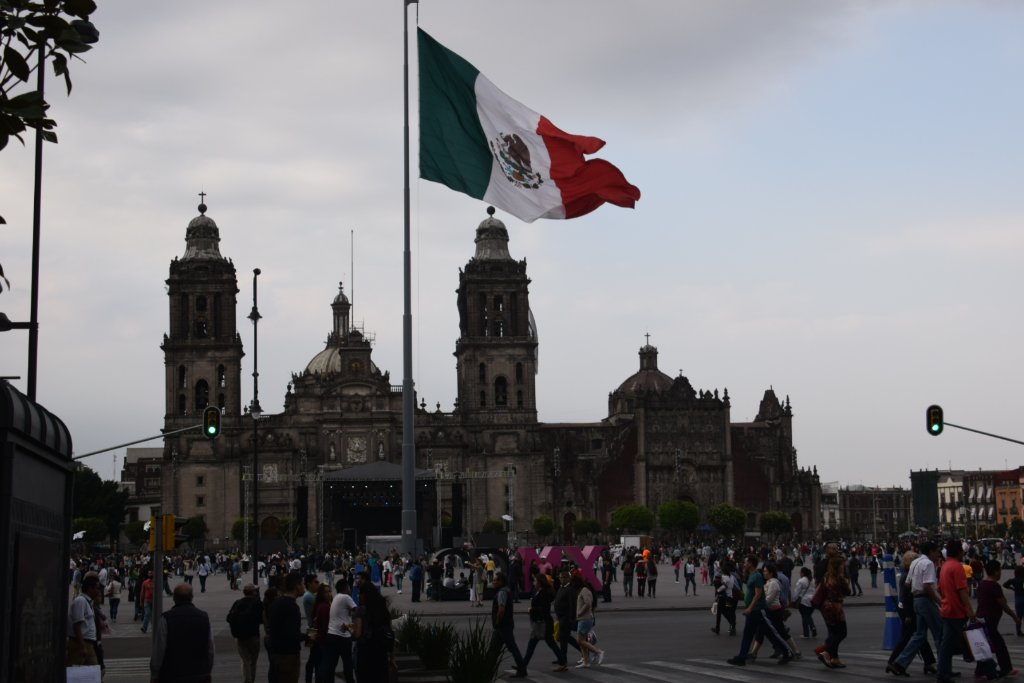
Twenty-two million people and it still manages to surprise you.
That is the thing about Mexico City that nobody prepares you for adequately. You read the population statistics. You look at the satellite images. You understand intellectually that you are about to enter one of the largest metropolitan areas on the planet, a city that has been continuously inhabited in some form since before the fourteenth century, that was the capital of an empire and then the seat of a colonial administration and then the center of a republic and is now, by most measures, one of the ten most populous urban areas in human history. None of that preparation makes the first walk out of any Metro station feel like something you have already experienced. The city keeps producing new versions of itself faster than you can catalog them.
I have been three times now. Each time felt like the first, which is not a failure of memory but a quality of the place.
Arrival as Immersion
The airport sits within the city, which means landing at Benito Juarez International is an immediate and total immersion. No buffer zone of highway and suburb between the plane and the place, no gradual transition from airport infrastructure to actual city. You exit the terminal and you are already in Mexico City, in the traffic and noise and the particular atmosphere of a metropolis that has been burning diesel since before the catalytic converter existed and has been trying to address that fact for approximately thirty years with mixed results.
The Metro from Terminal 1 to the city center runs on Line 5, then requires a transfer. It is packed at most hours of the day. It is also the cheapest, fastest, and most instructive option, delivering you directly into the street life of a city that does not maintain a tourist bubble in the conventional sense. The neighborhoods bleed into each other. The tourist zones and the residential zones and the commercial zones occupy the same blocks. You cannot quarantine the experience.
Chapultepec Park occupies the western edge of the central city: 686 hectares of forest, lakes, museums, and a castle built on a hill the Aztecs considered sacred. The Museo Nacional de Antropologia, which anchors the park's cultural district, is the most important archaeological museum in the Americas by collection depth and arguably in the world. The Aztec Calendar Stone alone justifies the visit, but the Olmec heads, the Mayan stelae, the room dedicated to the cosmological systems of civilizations that built cities while Europe was still negotiating with mud are the things that take the afternoon from you without warning.
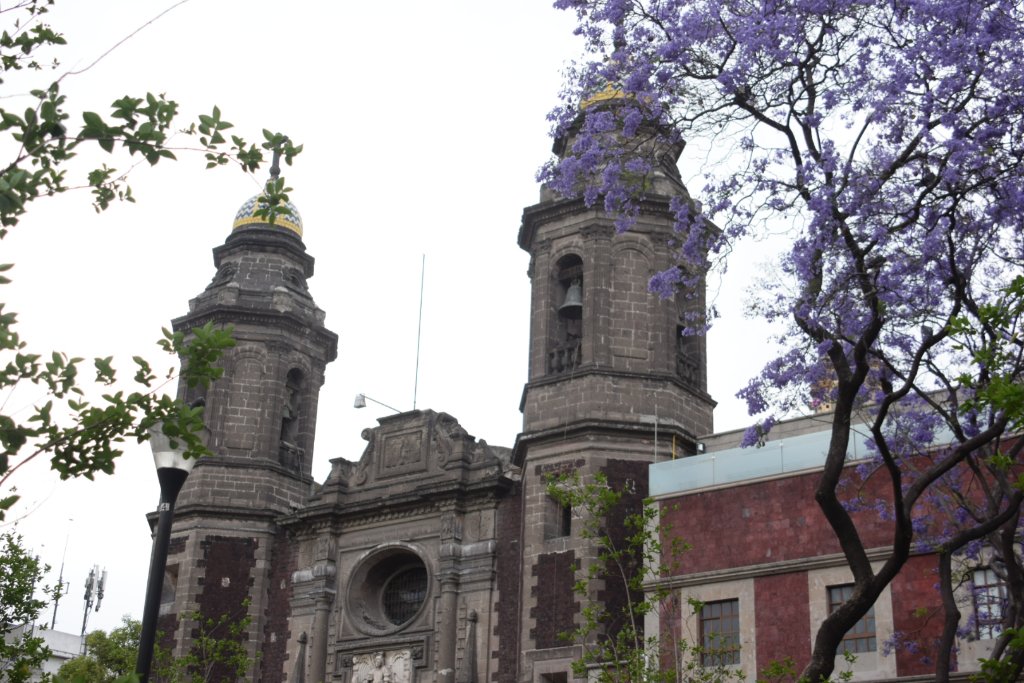
The Zocalo and What Lies Beneath It
Every major Mexican city has a zocalo, the central square that Spanish colonial urban planning mandated as the organizational center of every settlement. Only one of them is built on top of the most sacred structure in the Aztec world.
The Templo Mayor, the great double pyramid at the heart of Tenochtitlan, was dismantled stone by stone after the Spanish conquest of 1521. The materials were used to build the colonial city above. This was not incidental. It was policy, a deliberate act of replacement meant to communicate finality. The Cathedral was built on the pyramid's foundations. The Palacio Nacional replaced Moctezuma's palace. The plaza itself was cleared over the ruins of the Aztec market and ceremonial precinct, and for approximately four hundred and fifty years people walked across the stones without knowing what was directly beneath them.
In 1978, workers laying electrical cable hit carved stone at eight feet depth. The excavation that followed uncovered the Templo Mayor itself, intact enough to reconstruct in substantial detail. The archaeological museum built around the excavation is one of the better museums I have visited anywhere, not because of the presentation, which is functional but unremarkable, but because of the specificity of location. The objects are where they came from. That changes what they mean.
On weekend afternoons in the Zocalo, Conchero dancers perform in the plaza between the Cathedral and the Palacio, on the ground above all of it, in the regalia of the civilization that was dismantled to construct everything around them. This is either the most resonant thing happening in any public space in North America or a very close contender.
The Informal City
Mexico City runs, in significant part, on networks that never appear on any official map. The tianguis, informal street markets, operate in spaces with no official market designation, following patterns established decades ago and maintained through social rather than legal continuity. The peseros, shared minibuses running on semi-fixed routes for fixed fares, cover more of the city than the Metro and follow paths that no transit authority planned. The street food economy, which feeds millions of people daily at price points that make any restaurant comparison absurd, exists almost entirely outside the formal commercial system.
Understanding this is not a requirement for enjoying Mexico City. But it does explain why a city of twenty-two million functions at all, which is the more interesting question. The formal infrastructure of any city this size is necessarily incomplete. The gap between what the official city provides and what the city actually needs is filled by continuous, adaptive, largely invisible informal systems that have been refining themselves for generations. What looks like chaos from a tourist's perspective is actually a highly calibrated response to specific constraints.
Condesa, Roma, and the Question of Where to Stay
I will acknowledge the obvious: Condesa and Roma Norte are the most internationally legible neighborhoods in the city, where the cafes serve single-origin pour-overs and the restaurants have wine lists with natural wines from regions you will recognize. Both were heavily damaged in the 1985 earthquake and have been in various states of reconstruction and gentrification since. The trees along Avenida Amsterdam, which follows the oval of a former racetrack, are extraordinary. The parks are well-maintained. The restaurant density per block is genuinely remarkable.
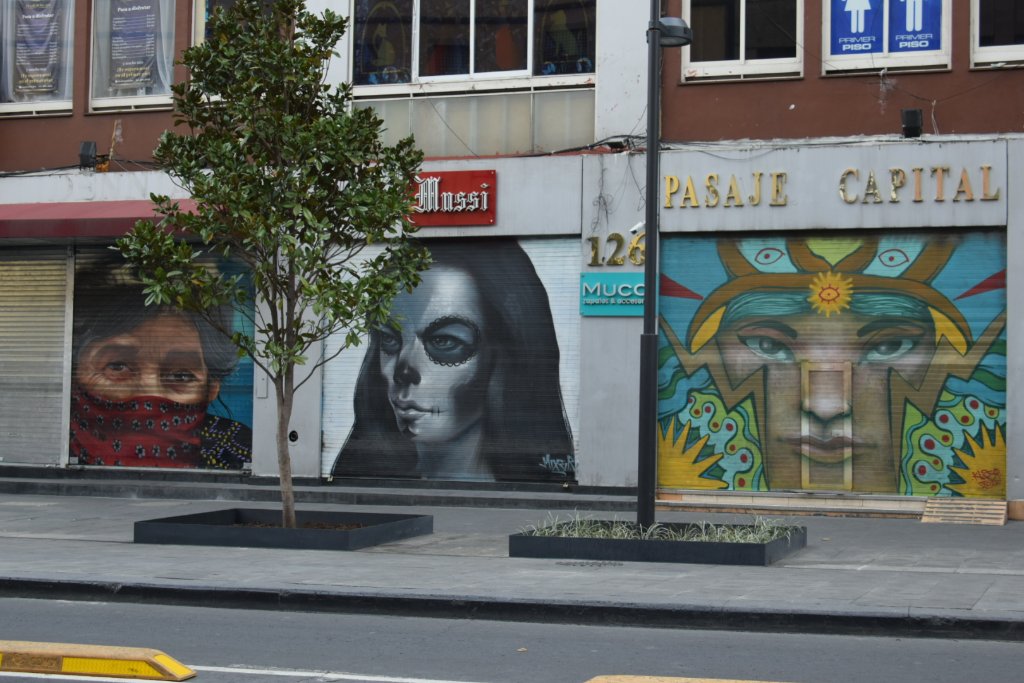
What I think is worth noting is that even in these neighborhoods, even on the most manicured blocks, the city pushes through. The taco stands appear at midnight beside the natural wine bars. Street vendors walk through the outdoor seating of expensive restaurants and nobody asks them to leave because the relationship between formal and informal commerce here is not adversarial; it is continuous. The earthquake-memorial murals on certain buildings are maintained rather than painted over. The history is present, ambient, unsuppressed.
The Food, Which Deserves Its Own Accounting
Every meal I have eaten in Mexico City has exceeded my expectations, and my expectations were already high going in. This is a specific observation, not a polite generalization. The quality of ingredient sourcing, preparation, and execution at the street and market level here is genuinely world-class by any standard you want to apply.
A bowl of chilaquiles rojos at a small place in the Doctores neighborhood — found because I was walking in the wrong direction and smelled something correct — arrived with a perfectly set egg, crema from a local dairy, and a salsa verde made from tomatillos that must have been roasted that morning. Forty pesos. Under two dollars. Nothing about that transaction made economic sense except that it was happening and I was eating it and it was better than most things I have paid fifty times as much for elsewhere.
That story repeats itself across neighborhoods, across meal types, across price points. The city feeds people extraordinarily well. This is not an accident of geography or tradition; it is the product of an urban food culture that has been refining itself continuously for centuries.
How Long You Actually Need
More than you have allocated. That is always the honest answer. Practically: a week is enough to feel like you have touched several of the city's major registers. Less than four days and you will spend the entire return flight listing what you missed, which is an unpleasant way to travel.
The altitude is real. Mexico City sits at 2,240 meters above sea level and the thinness of the air is noticeable for the first day or two, particularly if you are moving quickly. Drink more water than you think you need. Walk more than you think you can. Let the city set the pace rather than imposing one on it.
Come with fewer plans and more time. Let things be complicated. The city rewards the traveler who treats it as a subject worthy of sustained attention rather than a list of attractions to complete, and it will surprise you every time regardless of how many times you have been.