March in Mexico City means jacaranda season, and jacaranda season is not subtle.
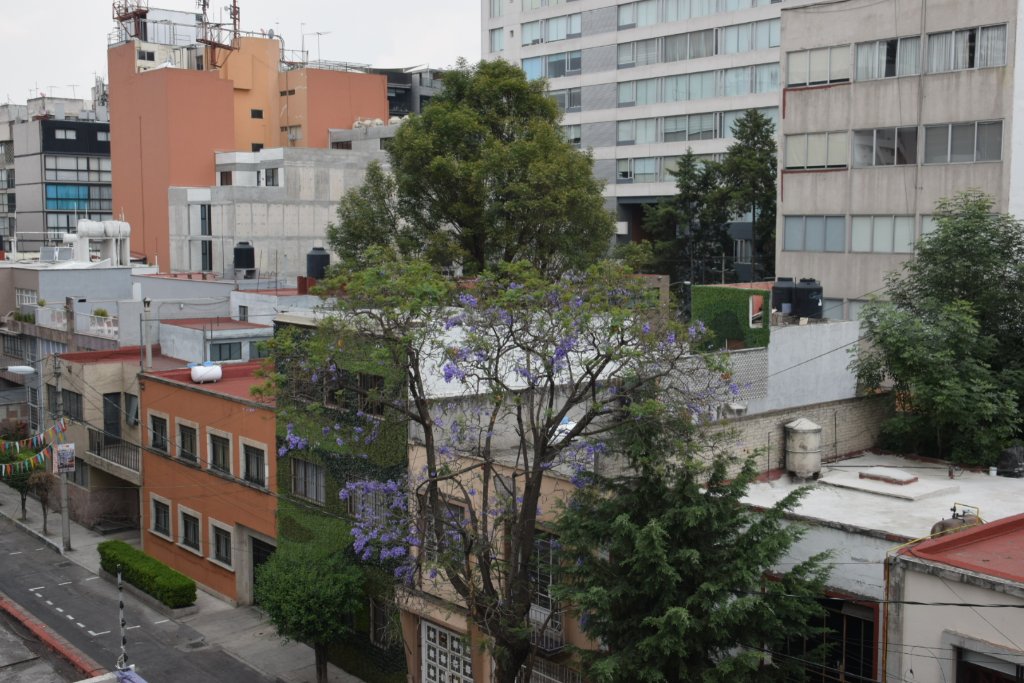
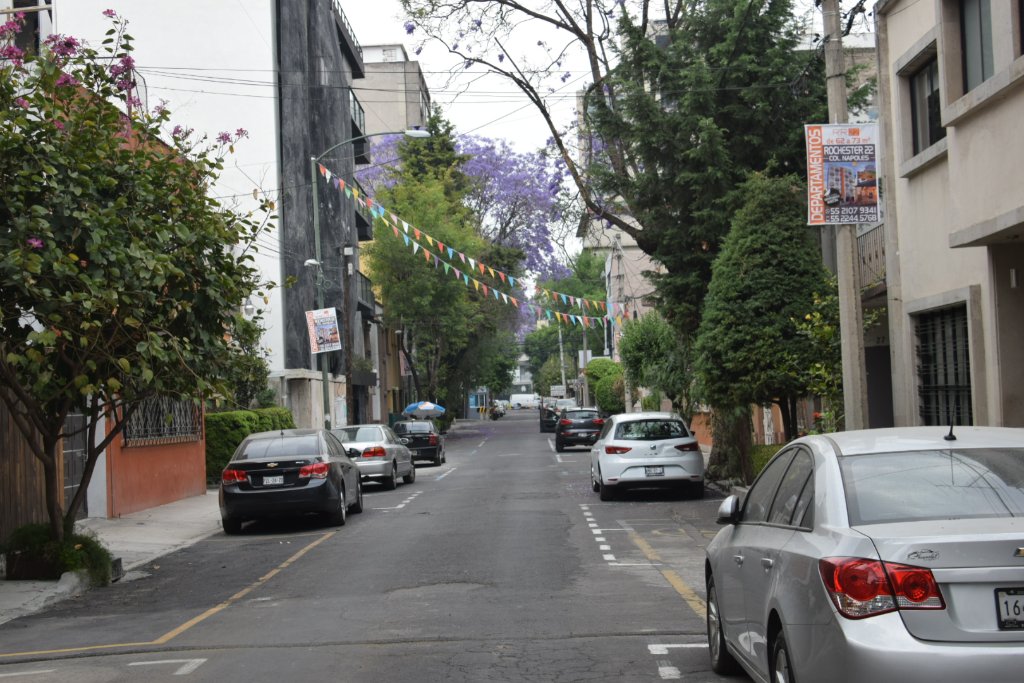
I stepped onto the balcony in Colonia Napoles before the city had fully committed to being awake, and there it was: an enormous tree on the corner building across the street, branches breaching the roofline, dropping purple in every direction. Banderitas, the small triangular paper flags strung between lampposts for festivals and markets and no particular reason at all, crossed the block beneath it. The sky was the particular pale grey that Mexico City does better than almost anywhere I have been. I had no plan. I started walking.
Jacarandas bloom in that improbable lavender that does not look real until it is directly in front of you. The petals fall constantly, carpeting the pavement below, catching on ledges and window sills and the handlebars of parked bicycles. In March and April the color is everywhere and unavoidable, which is unusual for a city that tends toward concrete grey and exhaust-stained beige the rest of the year. The trees are not native to Mexico — they were introduced from Brazil in the early twentieth century by the Japanese botanist Tatsugoro Matsumoto, who planted them throughout the city at the request of the government. That fact, which most people in Mexico City either do not know or do not find interesting, seems relevant every time I look at one.
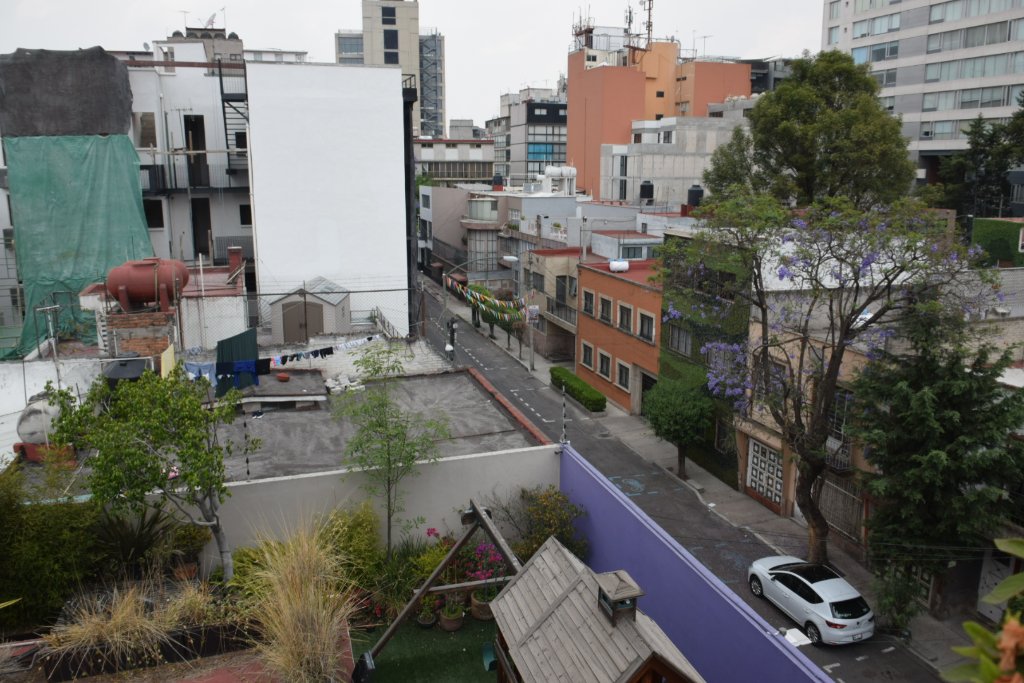
The Neighborhood Before the City Wakes Up
Colonia Napoles is not in any guidebook worth the paper it is printed on. Mid-century residential, wedged between the Zona Rosa and the airport corridor, it is the kind of neighborhood where the taco stands open before the souvenir shops even exist. Old women walk dogs that look exactly like them. Delivery trucks idle in front of buildings with ornate facades that nobody seems to notice anymore because they have always been there. The architecture is a specific Mexico City vernacular — stripped modernism with decorative details that suggest ambitions the budget could not fully sustain, which produces a kind of accidental dignity.
Walking through it at 7am is the closest I know to having Mexico City to yourself. The light does something interesting at that hour, low and angled, picking up the texture on carved stone lintels above doors that have not been touched since the 1950s. The smell of tortillas being pressed somewhere nearby. The particular rattle of a metal security gate opening for the first time that morning. This is the city before it performs for anyone, which is the version of any city worth paying attention to.
The Zocalo at Nine in the Morning
I found the Metro and came out at the Zocalo forty minutes later into a completely different version of the city. The square was already crowded at nine in the morning. A delegation of some kind was crossing toward the Palacio Nacional with a flag I did not recognize. A man was selling enormous balloons shaped like cartoon characters, which seemed to be selling briskly to parents who had clearly made a decision they would regret within the hour. The Cathedral's bell towers were partially obscured by scaffolding, which somehow made them look more permanent, not less; scaffolding on old buildings always implies continuity rather than decay.
The Aztec ceremonial dancers were not there that morning, but you could see where they had been: a faint circular scuff pattern on the stones near the Cathedral entrance that the city has never quite managed to clean away, the residue of feet that have been stamping the same ground for longer than the stones have existed.
I ate three tlayudas from a woman with a cart at the southeast corner of the square. She looked at me the way people sometimes do when a foreigner eats something regional with visible relief, no grimace, no request for modifications. No sour cream. No substitutions. The tlayuda in Oaxaca is better, technically, but eating one in the Zocalo with the Cathedral visible over your shoulder is its own specific experience that the better version cannot replicate.
Coyoacan: The Village the City Swallowed
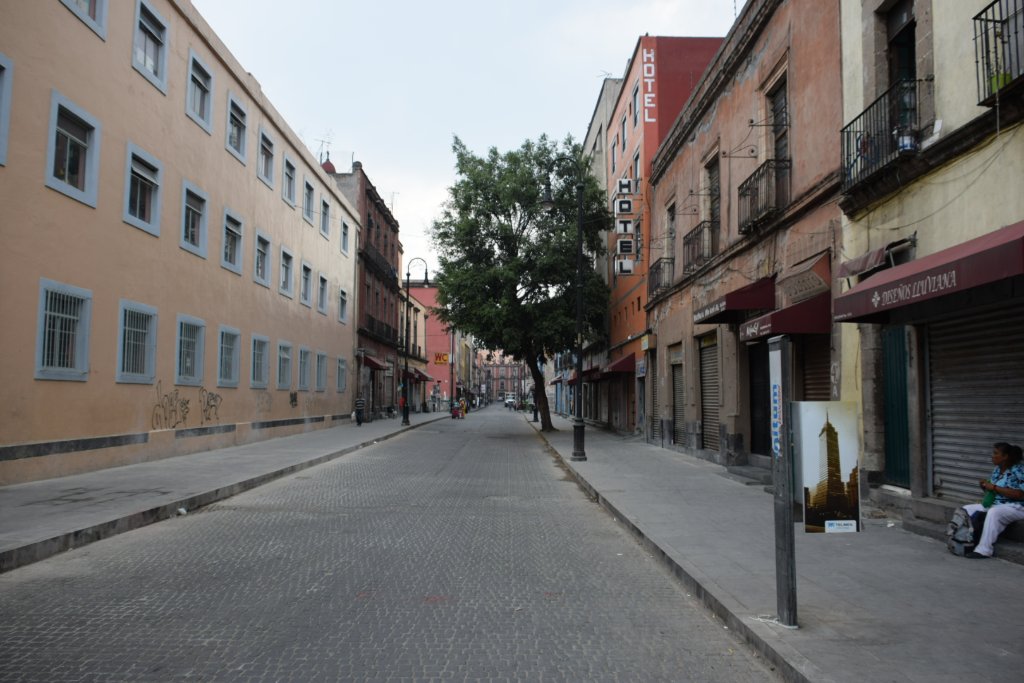
Twenty minutes south by Metro, Coyoacan runs at a different speed than the rest of the city. Cobblestoned and shaded, it was a separate village long before Mexico City swallowed it whole, and it has never quite forgotten that. The streets are named after things rather than numbers, which creates a navigational style that requires actual orientation rather than grid arithmetic. Frida Kahlo's Casa Azul is the obvious draw and genuinely worth visiting, though the line requires patience and the interior is smaller than photographs suggest. The garden is the part nobody talks about enough.
What I went for was the market. The Mercado Coyoacan is the kind of place that gives you exactly what you actually want for lunch from a stall run by a woman who has made tostadas de tinga for thirty years and has no interest whatsoever in your dietary preferences. I had two. Then a third, standing at the edge of the stall watching the lunch crowd develop the specific chaos that Mexican markets peak at around 1pm, where everyone is moving and nothing is colliding despite the apparent impossibility of this. The efficiency is real but invisible.
The courtyard outside the Parroquia de San Juan Bautista was filling up with pigeons and schoolchildren with roughly equal enthusiasm. The children were louder. I sat on one of the stone benches and tried to figure out if I was tired or just full. Probably both, and the distinction was not urgent enough to pursue.
The Second Day: Flowers Over Monuments
Day two started with an intention to reach Tlatelolco, the site of the 1968 student massacre where the Mexican government killed an estimated thirty to three hundred protesters ten days before the Olympic Games and then suppressed the story with a completeness that still feels staggering decades later. The Plaza de las Tres Culturas at Tlatelolco sits on top of an Aztec market, adjacent to a Spanish colonial church, beside a 1960s housing project. Three civilizations in one courtyard. The whole country in one city block.
I went instead to the Mercado Jamaica because someone at the hostel mentioned the flower market and I could not not go. This is the correct decision when it presents itself.
The flower market at Jamaica operates at a scale that is genuinely disorienting. Towers of cut gladiolas in red and orange and white. Roses in colors that seem architecturally impossible, architectural in their saturation. Buckets of bird of paradise. Entire stalls devoted to a single variety of dried grass I do not have a name for, sold by the bundle to customers who know exactly what they want and are already walking toward the exit before the transaction is complete. The smell is overwhelming in a way that is only briefly unpleasant before becoming something you want to stay inside of.
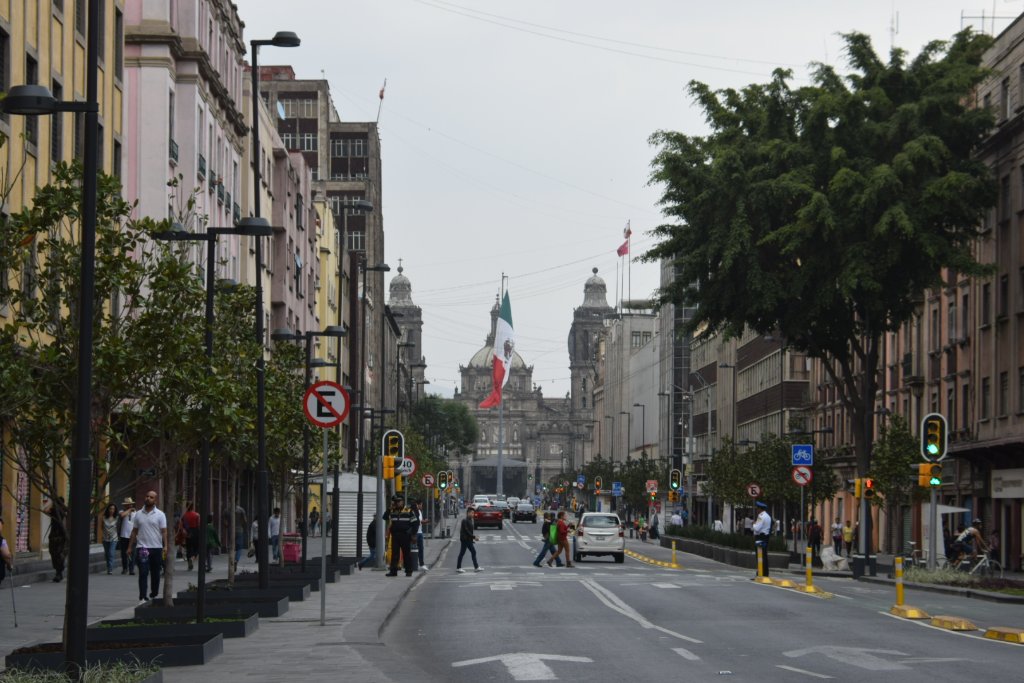
Vendors move through the narrow aisles with hand trucks at speeds that require evasive action. A man transporting a tower of dahlias taller than himself expects you to move and is correct to expect this. I bought nothing because I had nowhere to put anything. I spent two hours there regardless.
What Mexico City Actually Costs You
Not money, or not primarily money. Attention. The city demands a quality of presence that most places do not. Everything is happening at slightly too much volume, in slightly too many directions, with slightly too much historical weight per square meter. You cannot half-experience it. The city will not allow this.
Walking back to the Metro from Jamaica, I passed a building with a mural on its exterior wall that I cannot fully describe: figures from Aztec mythology rendered in a style that was clearly contemporary, layered over what appeared to be a pre-existing political mural from a different decade. Two things saying different things at once, neither one obscuring the other, both fully present simultaneously. That is Mexico City in an image. Dense, contradictory, loud, magnificent, utterly itself.
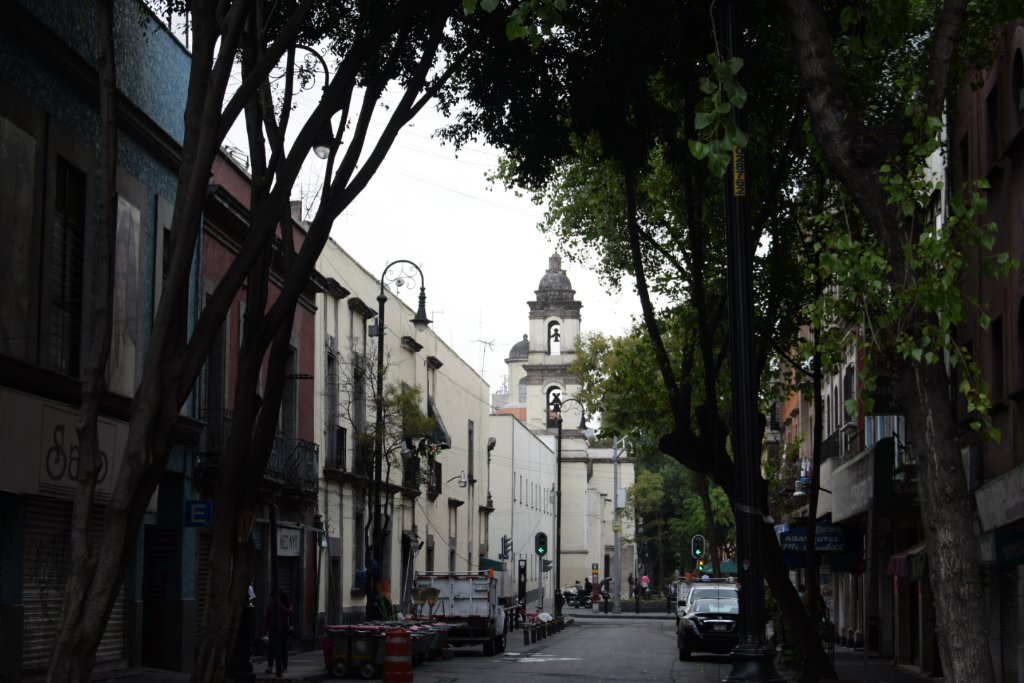
You can spend two days here and understand almost nothing. You can spend two weeks and understand slightly more. Neither outcome is a failure. The city is not withholding; it is simply very large and has been at this longer than you have. The appropriate response is to show up with fewer plans and more time, to let things be complicated, to eat the tostada and sit in the courtyard and follow the flower smell wherever it leads.
The jacarandas were still blooming when I left. The petals were already on every surface, purple against grey stone, purple against black asphalt, purple against the chrome bumper of a parked taxi. Purple season ends when it ends and not a moment sooner.